
Dental Implants
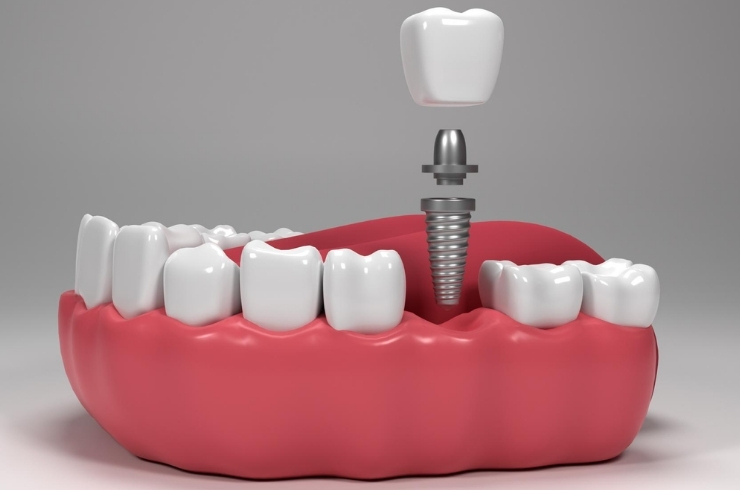
Dental Implants in Chhatrapati Sambhajinagar for Natural-Looking Tooth Replacement
Dental implants offer a stable, long-term solution for replacing missing teeth and restoring chewing function and smile appearance. A biocompatible implant post is placed in the jawbone to support a custom crown, bridge, or denture, depending on the number of missing teeth. At Chaudhari Advanced Orthopedic & Dental Clinic, implant treatment begins with a detailed assessment to determine suitable options based on your oral health, bone condition, and individual needs.
How Dental Implants Work
A dental implant replaces the root of a missing tooth with a small post, commonly made of titanium. Over time, the implant can integrate with the surrounding jawbone through a process called osseointegration. Once healing and stability are confirmed, a suitable restoration is attached to complete the replacement.
1. Titanium Implant Post
The implant post is placed into the jawbone during a procedure performed under local anesthesia. Its biocompatibility allows it to integrate with the bone and provide support for the replacement tooth.
2. Abutment Connector
The abutment connects the implant post to the final restoration. It is fitted at the appropriate stage of treatment, depending on the implant system and healing plan.
3. Custom-Made Crown or Restoration
A custom-designed crown, bridge, or denture is attached to restore appearance and function. The restoration is planned to complement your natural teeth and suit your bite.
Benefits of Dental Implants
Stable Tooth Replacement: Provides a secure alternative to removable dentures for suitable candidates.
Natural-Looking Appearance: Custom restorations are designed to complement surrounding teeth.
Chewing Function: Helps restore biting and chewing ability when treatment is successful.
Jawbone Support: Implant stimulation can help reduce bone loss associated with missing tooth roots.
Support for Adjacent Teeth: A single-tooth implant generally avoids the need to prepare neighboring healthy teeth, unlike some conventional bridges.
Everyday Oral Care: Implant-supported restorations can be maintained with regular brushing, interdental cleaning, and professional dental checkups.
Implants can last many years, but their longevity varies with oral hygiene, general health, implant position, and regular maintenance. They are not guaranteed to last a lifetime.
Who Can Benefit from Dental Implants?
1. Missing a Single Tooth
A single implant and crown can replace one missing tooth while generally leaving neighboring teeth untouched.
2. Missing Multiple Teeth
Several implants or an implant-supported bridge may be recommended to replace multiple missing teeth and improve chewing stability.
3. Extensive or Full-Arch Tooth Loss
Implant-supported bridges or dentures can restore an entire dental arch for suitable candidates following detailed evaluation and treatment planning.
4. Loose or Uncomfortable Dentures
Implant-supported solutions may improve denture retention and stability for patients who struggle with conventional removable dentures.
Types of Dental Implant Treatments
Single-Tooth Implant
A single implant supports an individual crown to replace one missing tooth. This option can restore function and appearance without typically requiring crowns on adjacent healthy teeth.
Multiple Dental Implants
When several teeth are missing, individual implants or an implant-supported bridge may be used. The recommended approach depends on the location of missing teeth, bone support, bite, and overall oral health.
Full-Mouth or Full-Arch Implants
For extensive tooth loss, a full-arch implant-supported restoration may replace multiple teeth using a carefully planned implant arrangement. Depending on individual needs, the final restoration may be fixed or removable.
What to Expect During the Dental Implant Process
01. Consultation and Diagnostic Imaging
Your dentist examines your teeth, gums, bite, and medical history. Dental X-rays or a CBCT scan may be recommended to evaluate bone volume, nearby anatomical structures, and potential implant positions.
02. Personalized Treatment Planning
Based on the assessment, your dentist explains suitable implant options, any additional procedures that may be required, estimated costs, and the expected treatment timeline.
03. Implant Placement
The implant post is placed into the jawbone using local anesthesia. Sedation may be considered in selected cases where available and clinically appropriate.
04. Healing and Osseointegration
The implant is given time to integrate with the surrounding bone. This commonly takes several months, although the exact period varies. A temporary restoration may be possible in selected cases.
05. Final Crown or Restoration Placement
Once the implant has healed adequately and its stability has been assessed, a custom-made crown, bridge, or denture is fitted and adjusted for comfort, appearance, and function.
Why Choose Our Dental Implant Services?
At Chaudhari Advanced Orthopedic & Dental Clinic, implant treatment focuses on careful assessment, personalized planning, and suitable restoration options. Dr. Charushila Chaudhari brings over 15 years of clinical experience in dental care. Each treatment recommendation considers oral health, available bone support, functional needs, and long-term maintenance requirements.
Frequently Asked Questions About Dental Implants
Is getting a dental implant painful?
Local anesthesia helps minimize discomfort during implant placement. Mild pain, swelling, or tenderness may occur afterward and usually improves during recovery. Your dentist will provide appropriate aftercare instructions.
How long do dental implants last?
Dental implants can function for many years, sometimes decades, with good oral hygiene and regular professional care. The crown or other restoration may need repair or replacement over time.
How long does the complete implant process take?
The process may take several months from assessment to final restoration. Healing time, bone quality, the need for additional procedures, and the complexity of treatment all influence the timeline.
Can I get implants if I have bone loss?
Possibly. Your dentist will assess bone volume and quality using appropriate imaging. Some patients may be considered for bone grafting or alternative treatment plans before implant placement.
How are implants different from dentures or bridges?
Implants are anchored in the jawbone, while conventional dentures are removable and traditional bridges are supported by adjacent teeth. The most appropriate option depends on your oral health, preferences, budget, and clinical assessment.
How do I care for dental implants?
Brush twice daily, clean around the implant restoration every day, attend regular dental checkups, and follow your dentist’s maintenance advice. Good oral hygiene helps reduce the risk of gum inflammation and implant complications.
Restore Your Smile with a Personalized Implant Plan
Explore suitable tooth-replacement options with a dental consultation. Discuss your oral health, treatment timeline, and estimated costs to make an informed decision about restoring your smile.